Thinking Through the News

-
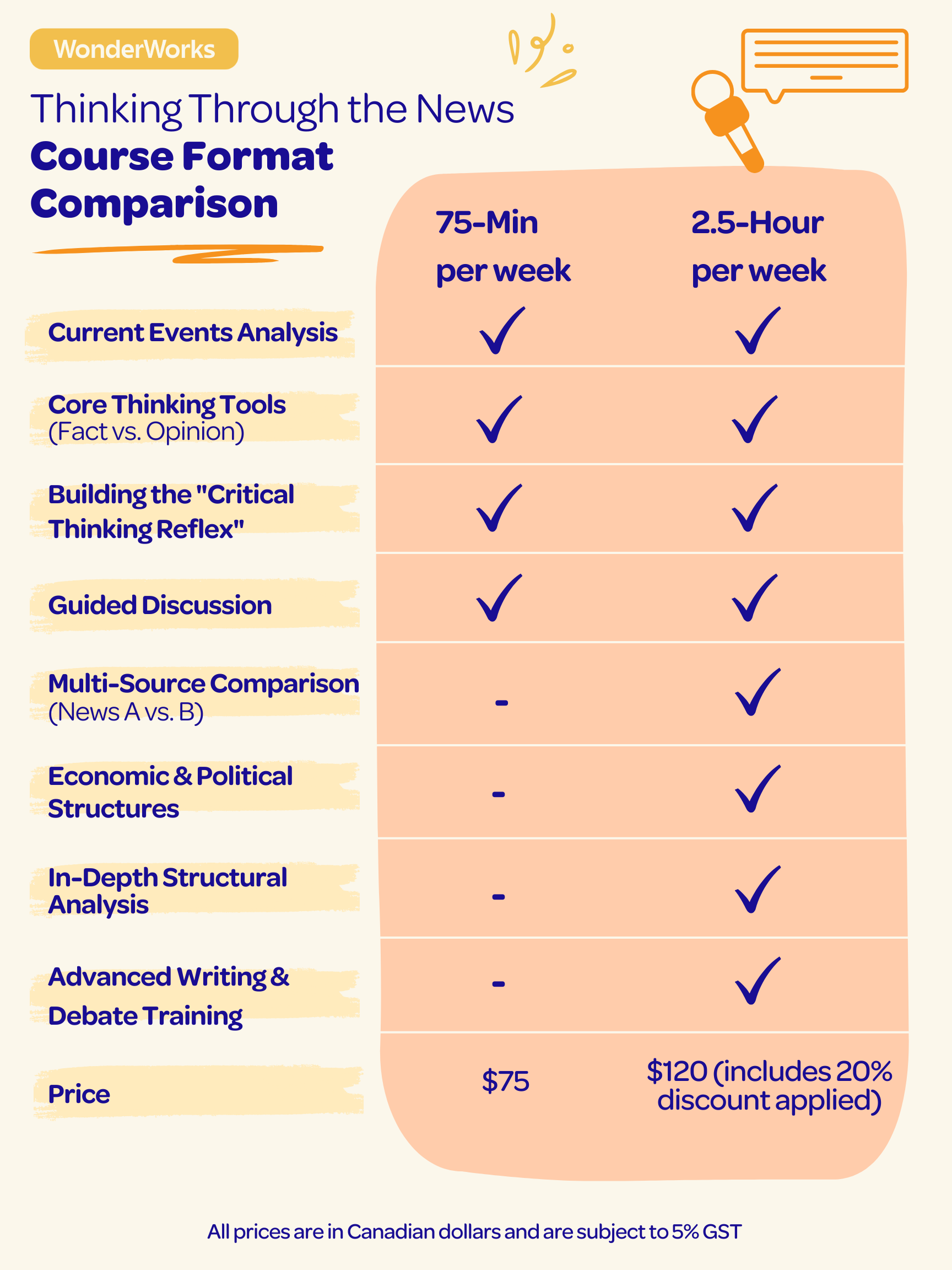
Distinguishing facts from feelings; understanding that different people have different views; basic information extraction.
-
Identifying media bias and agendas; comparing different news sources; understanding basic economic and social structures.
-
Analyzing complex political and international narratives; understanding systemic power structures; advanced debate and essay writing preparation.
Thinking Through the News (Ages 8–16) is a systematic thinking and expression program that turns global events into a classroom for critical analysis. We equip students with the tools to deconstruct media bias, distinguish fact from opinion, and understand global structures. Our goal is to move young learners from passive news consumption to evidence-based, logical expression.
Decode the World. Own the Narrative.
│
Decode the World. Own the Narrative. │
What We Teach: The 7 Pillars
Media Mechanics
Mastering the "5 Ws" and learning to spot the difference between clickbait and substance.
Fact vs. Opinion
Building objectivity by separating verifiable data from emotional or "loaded" language.

Logical Expression
Transforming complex analysis into persuasive, evidence-based writing and debate.

Perspective & Framing
Challenging the narrative by asking: "Who is speaking, and whose voice is missing?"
Bias & Agenda
Going behind the scenes to uncover editorial leanings and the motives behind the story.


Systemic Thinking
Decoding the power dynamics, government policies, and structures that shape our society.
Economic Logic
Connecting global news to real-world concepts like inflation, supply chains, and markets.
How We Teach
We don't tell students what to think, we teach them how to think.
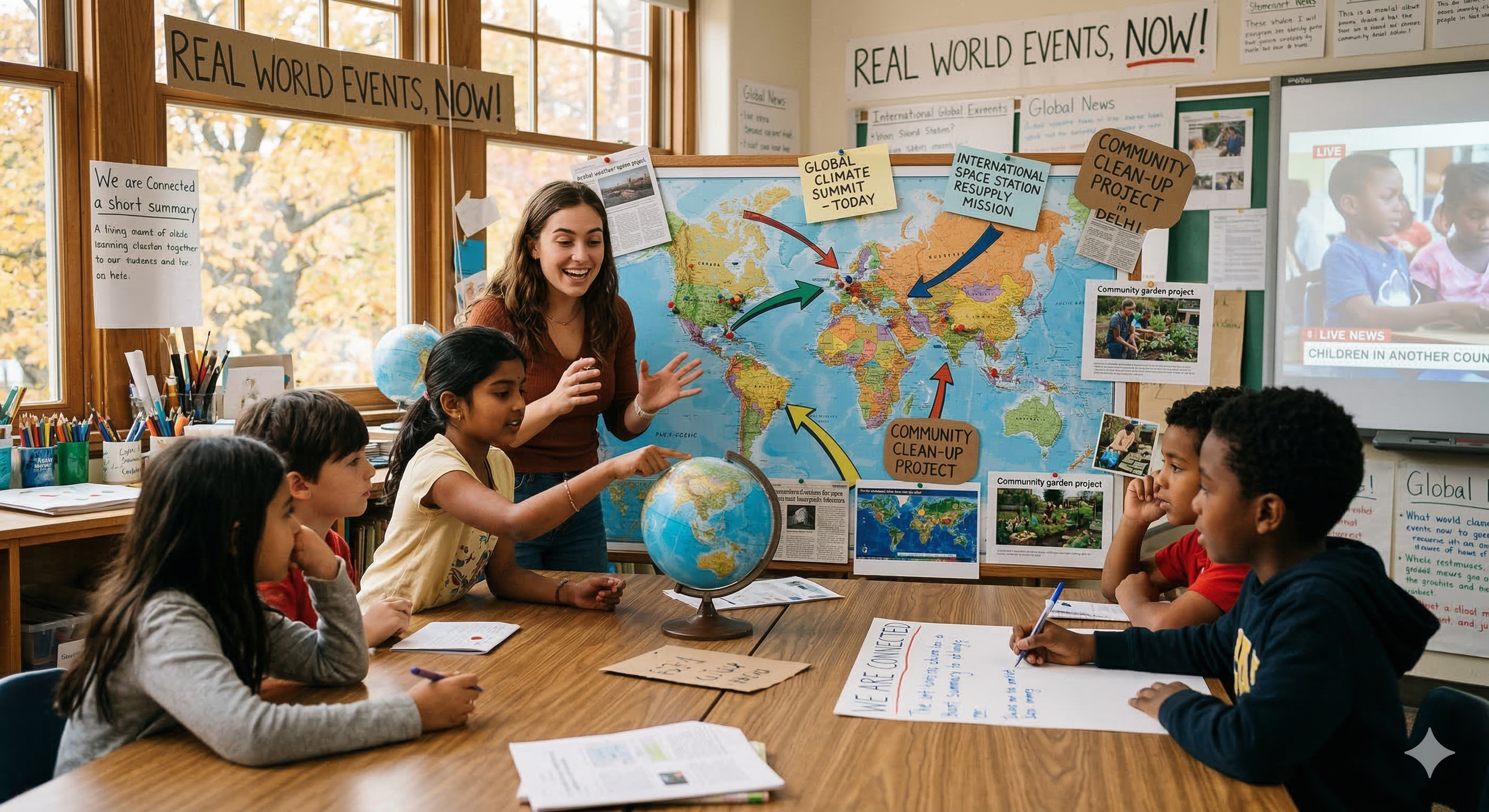
Real-World Classrooms,
Not Textbooks
We use real-time global events to ensure learning is always relevant, urgent, and connected to the "now”.
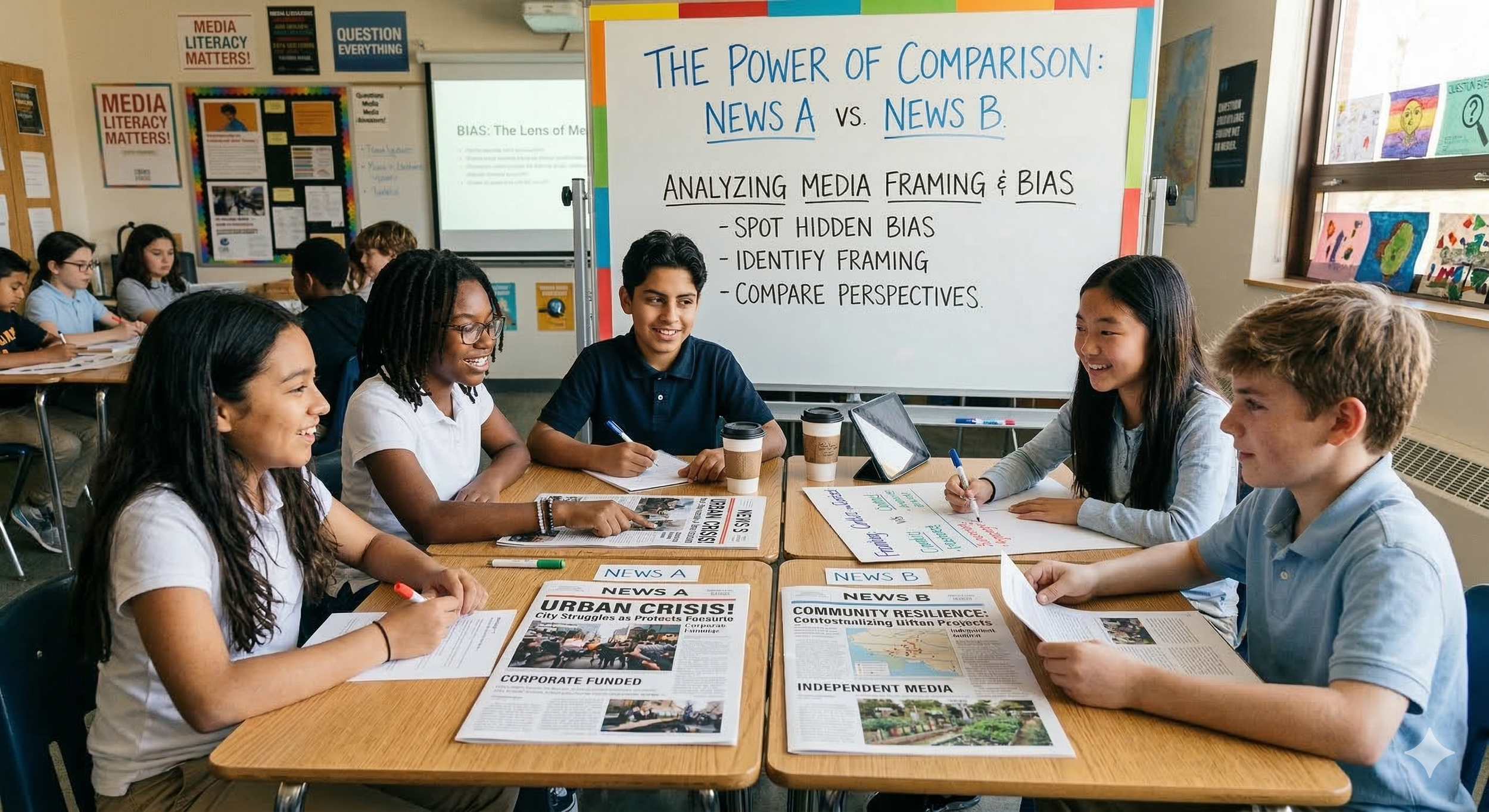
The Power of Comparison
By analyzing "News A vs. News B," students learn to spot hidden bias and identify how different media outlets frame the same story.
Student-Led Discovery
Students aren't passive listeners. Through our "Look-Think-Question" cycle, they become active investigators who find their own evidence-based answers.
Choose Your Path:
From developing daily thinking habits to mastering global logic, we provide the framework for your child to evolve from a passive observer into a sharp, informed global thinker.