
Is AI Affecting Your Teen's Independent Thinking? What Parents Need to Know
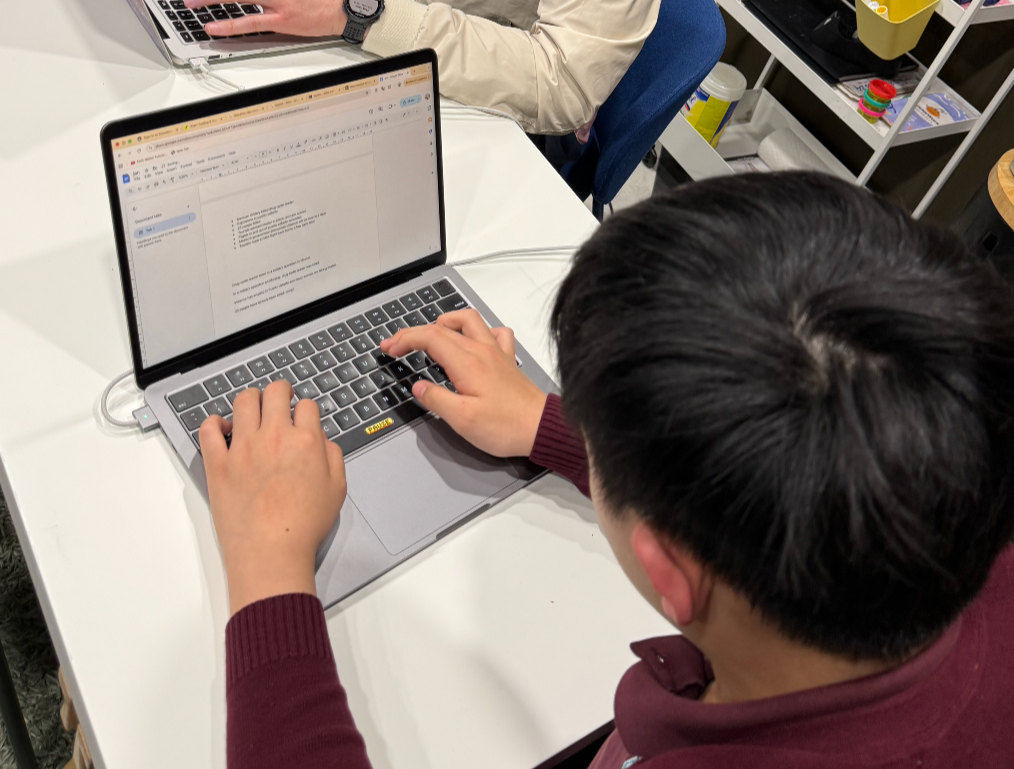
Short answer: it can. It depends on when your teen turns to AI and what they do with the answer.
A student who once had to hunt for sources, wrestle with an argument or figure out how to start can now type a question and get a polished response in seconds. That's useful. It also raises a question every parent should ask:
If AI does the work, who's doing the thinking?
AI isn't the enemy of learning. Used well, it explains difficult concepts, tests ideas and gives fast feedback. The trouble starts when it stops supporting the thinking and starts replacing it.
Independent thinking is the ability to question information, weigh evidence, consider other perspectives and reach a conclusion through your own reasoning. Finishing an assignment without help is something else entirely.
The Numbers Behind the Concern
In a 2026 nationally representative survey of 1,017 U.S. teens, Common Sense Media found that 70% use AI for schoolwork. Among those students, 63% said they use it to get answers rather than working their own way to them, and 38% said having AI available leads them to generate fewer ideas of their own.
The same survey found that 77% of teen AI users also treat it as a support tool for brainstorming, checking work and getting feedback. Often it's the same teens doing both.
So the question isn't whether your teen uses AI. It's how.
Why Independent Thinking Matters More Now
Today's teens have more information at their fingertips than any generation before them. More information doesn't mean better understanding. Students still have to decide whether something is accurate, where it came from, what evidence supports it and whether they actually agree with it.
These skills carry English, Social Studies and History, where analysis counts for more than recall. They matter far beyond school too. Teens meet news, social media posts, online opinions and AI-generated content every day.
Finding an answer is no longer the hard part. Knowing whether it deserves trust is.
How AI Can Help or Hurt Your Teen's Thinking
Picture two students working on the same essay.
The first builds an initial argument, researches the topic, then asks AI to point out its weaknesses. She weighs the suggestions, checks whether they hold up and decides what to revise.
The second asks AI for three arguments and an outline.
Both used AI. Only one still did the thinking.
Getting the Answer Before Attempting the Problem
Some of the most valuable learning happens before the right answer appears. A student misreads something, tries again, notices a contradiction, looks for another explanation. It's slow. It's also where understanding gets built.
When AI hands over the answer first, the student reaches the end of the assignment without doing the reasoning it was designed to teach. The speed isn't the problem. Skipping the forming, testing and revising of an idea is.
Trusting a Confident Answer
AI writes with authority: clear, organized, sure of itself. To a teenager, that sounds trustworthy. But confidence and correctness are different things.
Teach one habit: How do I know this is true? Challenging an AI response is becoming as valuable as knowing how to prompt one.
Skipping Source Evaluation
Traditional research forces comparison. Websites, articles, books and primary sources disagree, and students learn to judge credibility and notice what's missing. A chatbot folds all of that into one answer.
That's convenient. It also removes a layer of learning. Students who stop asking where information comes from get worse at spotting weak evidence, misinformation and unsupported claims.
Losing Practice Forming an Opinion
Independent thinking matters most when there's no single right answer. Social media, technology, climate policy, ethics and current events all ask students to weigh evidence, understand competing views and decide what they think.
If AI writes the argument before the student has an opinion, the essay may sound sophisticated while the reasoning behind it stays thin. That gap shows up the moment someone asks them to explain or defend it.
How to Tell When AI Is Doing Too Much of the Thinking
You can't monitor every assignment, and you don't need to. Watch whether your teen can explain their own work.
A few signs to notice: a polished essay, but they can't state the main argument in their own words. They open AI the moment a question gets hard. They rarely check what it tells them. They get uncomfortable when there's more than one possible answer.
One question does most of the work:
"Can you explain how you arrived at this answer?"
If they can explain the reasoning, defend the conclusion and say where AI helped, the tool is supporting their learning. If they can't, AI did more of the thinking than they did.
The aim isn't to catch your teen using AI. It's to find out whether they're still doing the learning.
Don't Ban AI. Teach Teens to Think While Using It.
Banning AI won't prepare teenagers for university or the workplaces ahead of them. Common Sense Media also found that among teens who use AI for schoolwork, nearly half have had a tool blocked at school, and most simply switched to a personal device. The ban changed where they used it, not whether.
A better rule is four steps: Think, Ask, Check, Decide.
Think. Before opening AI, form an initial idea. What do I already know? What do I think the answer is?
Ask. Use AI to explore the topic, clarify something difficult or challenge that first idea.
Check. Verify important claims against other reliable sources. Does the evidence actually support the response?
Decide. Return to the original question and decide what you think.
AI contributes information. The student makes the judgment.

How to Build Independent Thinking at Home
None of this needs formal lessons. Ordinary conversations do the work.
When your teen shares an opinion, hold off on agreeing or disagreeing. Ask, "Why do you think that?" Then follow with "What makes you trust that information?" or "What would someone who disagrees with you say?" The point isn't to challenge everything they say. It's to make explaining reasoning a normal part of family conversation.
When they're stuck, resist the urge to step in. "What have you tried so far?" often does more than the answer would.
You can also turn AI into the exercise. Show your teen an AI-generated answer and ask, "What might be wrong, incomplete or questionable about this?" AI stops being an authority and becomes one source among many.
Why the News Is the Best Practice Ground
Real-world issues are messy. A single news story can involve competing stakeholders, conflicting viewpoints, incomplete information and cause and effect tangled up with interpretation. There's no answer key to memorize, so students have to think.
Go past "What happened?" and ask:
Why did it happen?
Whose perspective is missing?
Which claims does the evidence support?
What assumptions sit underneath?
Did hearing another view change your mind?
Questions like these turn students from consumers of information into evaluators of it.
How Wonderworks' Thinking Through the News Builds These Skills
Thinking Through the News takes that approach and makes it a practice. Students use current events to examine issues, weigh different perspectives, ask questions and explain the reasoning behind their own ideas.
The program doesn't tell students what to think. It teaches them how. They learn to separate fact from opinion, spot assumptions, evaluate evidence and take seriously views that differ from their own. They practise stating a position clearly, listening to others and responding thoughtfully.
These habits go well beyond the classroom. They're what help a teenager handle a world of information, opinions, social media and AI-generated content.
Answers Are Easy. Judgment Isn't.
AI can draft an essay, summarize an article and suggest an argument in seconds. It can't decide what your teenager should believe, or why. That job stays with them.
The realistic goal isn't keeping AI out of education. It's making sure that as AI grows more capable, your teen's ability to question, reason and judge grows with it.
The question used to be, "Can my child find the answer?"
Now it's: "Can my child tell whether that answer makes sense?"
Wonderworks' Thinking Through the News gives young people structured practice at exactly that: analyzing real issues, weighing different perspectives and building the confidence to reach conclusions of their own.
Help your teen become more than a consumer of answers. Help them become an independent thinker.